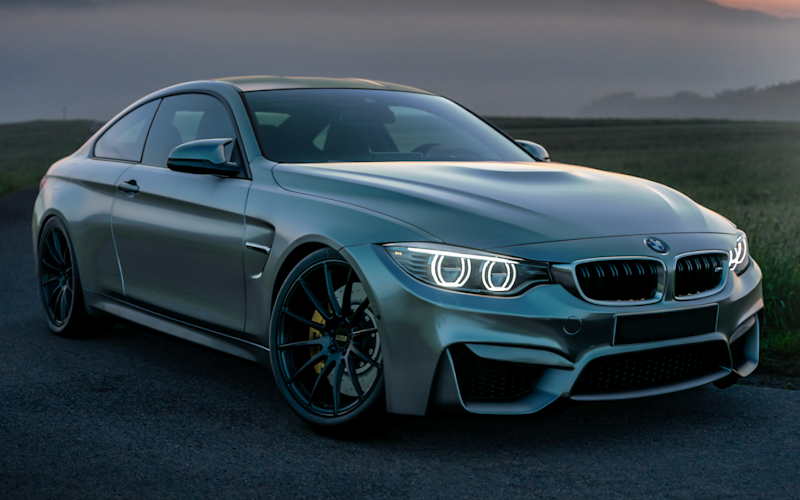
Our top picks for winter tires that handle Ontario's toughest conditions.
I have bought, mounted, and worn through more sets of winter tires than I care to count. After fifteen Ontario winters driving from the lake-effect chaos around Barrie to the freezing rain belt east of Kingston, I have opinions about winter rubber that are not based on spec sheets. They are based on that moment when you hit the brakes on an icy off-ramp at Highway 400 and Dunlop and find out exactly what your tires are made of.
Here is what actually works on Ontario roads, what each set costs at a real tire shop, and where each tire falls short. No tire is perfect for every condition, so I will be straight about the trade-offs.
The Blizzak is the default recommendation at most Ontario tire shops and for good reason. Bridgestone's multi-cell compound genuinely grips ice in a way you feel through the steering wheel the first time you pull out of the driveway on a -25°C morning. The WS90 is the latest version and it improves on the already strong WS80 with better wet braking and longer tread life.
Where Blizzaks dominate is in that classic Ontario mix — the grey slush that covers every road from November through March. After the plows go through but before the pavement dries, you are driving on a half-frozen, half-liquid mess. The WS90 channels it away remarkably well. I ran a set on a Civic for two full winters and never once had that stomach-dropping moment of slush hydroplaning.
The downside is tread life. The soft compound that makes Blizzaks so effective on ice also wears faster than harder competitors. Expect two to three solid winters, maybe four if you drive gently and swap them off by mid-April. By the third season, I noticed a real drop in ice-braking confidence. At around $750 to $900 for a set of four in popular sizes like 205/55R16, that means roughly $250 to $300 per winter — still cheaper than one insurance deductible.
Best for: Drivers who deal with a lot of mixed conditions, city commuters in Toronto, Hamilton, Ottawa, and London.
If you log serious highway kilometres — regular Toronto-to-Ottawa runs, or commuting into the GTA from Oshawa or Barrie — the X-Ice Snow deserves your attention. Michelin built these to be quiet and stable at 110 km/h on the 401 while still delivering legitimate winter grip.
The highway manners are immediately noticeable. Most winter tires drone at speed, especially the softer-compound options. The X-Ice Snow stays composed, which matters when you are spending 45 minutes each way on the highway every day for five months. But do not mistake quiet for soft — these stopped me confidently on a sheet of ice at a red light in Peterborough last December when I was certain I was going through the intersection.
The real selling point is longevity. Michelin's Flex-Ice 2.0 compound stays pliable in extreme cold but wears noticeably slower than the Blizzak. After two hard Ontario winters on a CR-V, mine still had plenty of tread. Budget three to four winters easily, which changes the cost math significantly. At $850 to $1,050 for a set of four, you are paying roughly $250 per season — comparable to the cheaper Blizzak despite the higher sticker price.
Best for: Highway commuters, drivers who want a quieter ride, and anyone who prefers to amortize tire cost over more seasons.
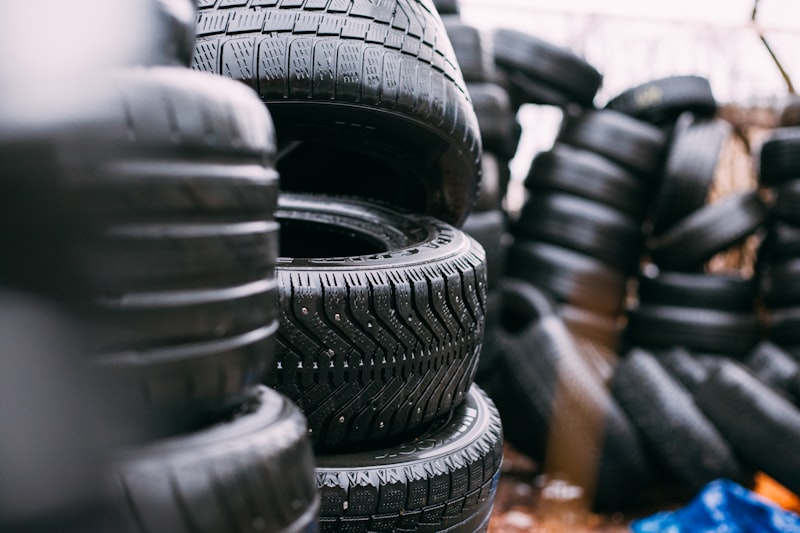
Continental does not get the same buzz as Bridgestone or Michelin at Ontario tire counters, but the VikingContact 7 is a seriously capable tire that punches above its price. It was developed for Scandinavian conditions, and if you have been to Timmins or Kapuskasing in January, you know that is not far off from Northern Ontario reality.
On pure ice and packed snow, the VikingContact 7 is excellent. The braking distances on ice are among the shortest in independent testing — genuinely confidence-inspiring on those mornings when your driveway is a sheet of glass. For drivers north of Barrie or anyone who regularly crosses Muskoka, Parry Sound, or Algonquin Park territory, this tire handles the cold, dry conditions with impressive composure.
The weakness shows up in heavy, wet slush. In a Toronto or Hamilton slushy mess, the VikingContact gets a bit squirmy at speed. Not dangerous, but you notice it compared to the Blizzak. Deep snow performance is adequate rather than exceptional. For the typical Ontario winter mix, though, it is a strong contender at $650 to $800 per set — meaningfully less than the Michelin or Bridgestone.
Best for: Budget-conscious drivers, Northern Ontario residents, anyone prioritizing ice grip over slush performance.
Nokian invented the winter tire in Finland in 1934, and the Hakkapeliitta R5 is the current expression of nine decades of cold-weather obsession. The Cryo Crystal 3 particles embedded in the compound provide microscopic ice grip that you have to feel to understand.
On ice, nothing else on this list matches it. Full stop. On a frozen parking lot in Kingston last February, I could feel the R5 grabbing where other tires would simply slide. For anyone who deals with the ice storms that seem to slam Eastern Ontario every other winter — the kind that turn every road into a skating rink for days — this level of grip is not a luxury, it is genuine safety.
The catches are price and availability. At $900 to $1,100 for a set of four, these are the most expensive option on this list. They can also be harder to find — not every Canadian Tire or Kal Tire stocks them. You may need to order through a Nokian dealer or buy online from PMCtire or Quattro Tires. Tread life is good, roughly on par with the Michelin, so you will get three to four winters.
Best for: Drivers who prioritize ice performance above all else, Eastern Ontario residents in the freezing rain belt, anyone willing to pay premium prices for premium grip.
Not everyone can spend $900 or more on winter tires, and a good budget winter tire is vastly better than running all-seasons through an Ontario winter. The Goodyear UltraGrip Winter is the tire I recommend to anyone watching their wallet. At $500 to $650 for a set of four, it delivers legitimate winter performance.
It will not match the Blizzak on ice or the Michelin on highway, but it handles the daily commute through snow-covered roads and cold pavement competently. The tread compound stays flexible below -20°C and the siping pattern provides decent grip. Tread life is two to three winters.
Buy a dedicated set of steel rims for your winters. Yes, it is $300 to $500 upfront for the rims, but you save $80 to $120 on mounting and balancing twice a year (the shop just swaps the whole wheel), and you avoid damaging your nice alloys on Ontario's legendary spring potholes. Most shops offer package deals in September and October — that is also when Bridgestone, Michelin, and Continental run their fall rebates of $70 to $100 per set.
Consider going slightly narrower for winter. A narrower tire with a taller sidewall cuts through snow to reach pavement instead of floating on top. Check your owner's manual for the recommended winter size. And get your tires mounted before mid-November — once the first snow hits, every shop in Ontario has a two-week wait.
If you are not sure you need dedicated winters, read our comparison of all-season, all-weather, and winter tires to understand the real differences. Check our guide on when to make the swap — timing matters more than most people think. And once your winters are on, monitor your tire pressure through the cold months because Ontario's temperature swings can drop your PSI overnight.
Our top picks for winter tires that handle Ontario's toughest conditions.

Explore the best coastal routes around Georgian Bay.
What to check before buying a used vehicle in Ontario.