
Our top picks for winter tires that handle Ontario's toughest conditions.
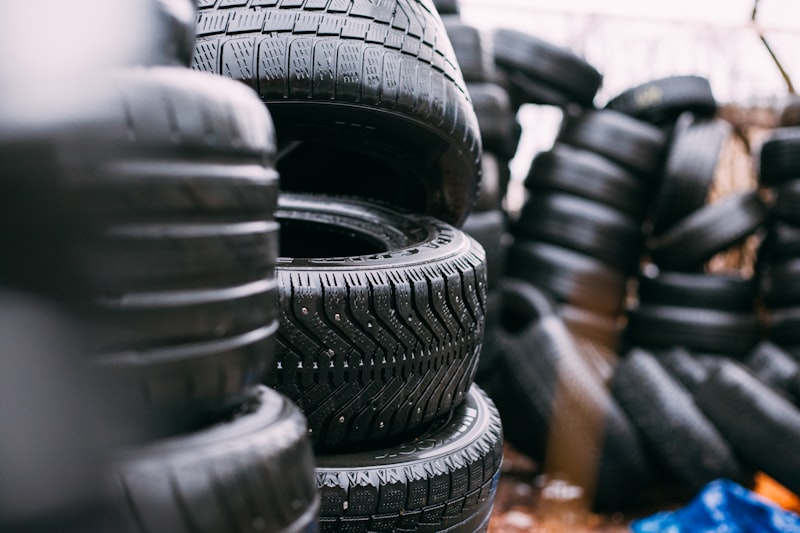
The tire industry has done an outstanding job confusing people with naming conventions. All-season sounds like it handles all seasons. All-weather sounds like it handles all weather. And winter tires sound like they are only for blizzards. None of that is exactly right, and the confusion costs Ontario drivers real safety every year.
Here is the straightforward breakdown, with Ontario-specific advice on what actually makes sense for your driving situation.
Let us start by being honest about what all-season tires actually are. They are engineered for dry pavement, wet pavement, and light autumn rain. They are not engineered for snow, ice, or temperatures below 7°C. The rubber compound in an all-season tire begins to harden as temperatures drop, and by the time you are dealing with a typical Ontario January morning at -15°C, your all-seasons have the grip characteristics of a hockey puck.
All-season tires do not carry the Three-Peak Mountain Snowflake (3PMSF) symbol on the sidewall. This symbol matters because it indicates that the tire has been tested and certified for use in severe snow conditions. Without it, you are driving on rubber that was never designed for what Ontario winters demand.
Common all-season tires you will see at Ontario shops include the Michelin Defender LTX ($170 to $230 per tire), Continental TrueContact ($140 to $190), and Bridgestone Turanza ($130 to $180). They are fine from May through October. They are genuinely dangerous from December through March on Ontario roads.
Bottom line: If you only own one set of tires and you live in Ontario, all-seasons are the wrong choice.
All-weather tires are the newest category and the one causing the most confusion. Unlike all-seasons, all-weather tires do carry the Three-Peak Mountain Snowflake symbol, which means they are certified for severe snow conditions. They are designed to stay on your car year-round while still providing meaningful winter capability.
The most popular all-weather tires in Ontario right now are the Nokian WR G4 ($160 to $220 per tire), the Toyo Celsius ($140 to $190), and the Goodyear Assurance WeatherReady ($150 to $200). They use a compound that stays pliable in cold temperatures while still performing adequately in summer heat.
The trade-off is that all-weather tires are a compromise in both directions. In winter, they provide roughly 70 to 80 percent of the grip of a dedicated winter tire. In summer, they wear faster and handle slightly worse than a good all-season. You are paying a penalty in both seasons to avoid the hassle and cost of swapping tires twice a year.
There is also the insurance angle. Because all-weather tires carry the snowflake symbol, most Ontario insurance companies will give you the winter tire discount — typically 2 to 5 percent off your premium. That discount usually requires the tires to be on your vehicle between November and April. So if you are running all-weathers year-round, you qualify automatically.
Dedicated winter tires are engineered for one job and they do it exceptionally well. The rubber compound stays soft and flexible well below -30°C. The tread patterns are designed with deep sipes that bite into ice and channel away slush. The performance difference between a winter tire and an all-season below 7°C is not subtle — it is the difference between stopping confidently and sliding through an intersection.
Testing data consistently shows that winter tires reduce braking distances on ice by 30 to 40 percent compared to all-seasons, and by 15 to 20 percent compared to all-weather tires. On a highway off-ramp at 80 km/h, that difference can be 20 or more metres of stopping distance. That is the difference between stopping safely and rear-ending the car in front of you.
Top options for Ontario drivers include the Bridgestone Blizzak WS90 ($160 to $220 per tire), Michelin X-Ice Snow ($180 to $250), and Nokian Hakkapeliitta R5 ($200 to $270). Yes, you need to buy two sets of tires and pay for seasonal swaps. But a set of dedicated steel rims ($300 to $500) means the swap costs only $60 to $80 per visit, and your tires last longer because each set gets used only half the year.
The common objection is cost. Two sets of tires sounds expensive. But here is the math that most Ontario drivers overlook:
If you run all-seasons year-round, your one set wears out in roughly 60,000 to 80,000 km. If you split your driving between winters and summers (or all-seasons), each set lasts those same kilometres but accumulated over more years because each set is only in use for half the year. You are not buying more tires over the life of the car — you are just splitting the wear.
The real additional cost is the rims and twice-yearly swaps, which works out to roughly $150 to $200 per year. Compare that to your insurance premium of $2,779 per year (the Ontario average), your collision deductible of $500 to $1,000, and the potential for injury. Winter tires are the cheapest safety investment you can make.
Ontario insurance companies know this, which is why they offer the winter tire discount. That 2 to 5 percent off your premium puts $55 to $140 back in your pocket annually. With average Ontario insurance rates being what they are, it practically pays for the seasonal swap.
Ontario permits studded tires from October 1 through April 30, but with restrictions. They are not allowed on certain highways and expressways in southern Ontario. For most drivers in the GTA, Ottawa, London, or Hamilton, modern studless winter tires have closed the gap to the point where studs are unnecessary. Studs damage pavement, they are loud on bare roads, and they offer minimal advantage over a good studless tire on the mix of conditions we typically encounter.
If you regularly drive unplowed roads in Northern Ontario, studs are a conversation worth having with your tire shop. Otherwise, studless is the way to go.
Run dedicated winter tires from mid-October through mid-April and a set of quality all-seasons (or performance tires) for the remaining months. It is the safest setup, it is the most cost-effective over the long term, and it gives you proper grip in every season.
If you genuinely cannot manage two sets — no storage, tight budget, limited driving — then all-weather tires are a vastly better option than running all-seasons through an Ontario winter. Just understand that you are accepting a performance compromise and drive accordingly.
Ready to choose your winter set? Our winter tire reviews break down the top options with Ontario pricing. And check our guide on when to switch to winter tires to make sure you time the swap right.
Our top picks for winter tires that handle Ontario's toughest conditions.

Explore the best coastal routes around Georgian Bay.

What to check before buying a used vehicle in Ontario.